This website uses cookies.
We use cookies in order to offer our visitors a better website experience, but also to personalise content and ads, to provide social media features and to analyse our traffic. We also share information about your use of our site with our social media, advertising and analytics partners.
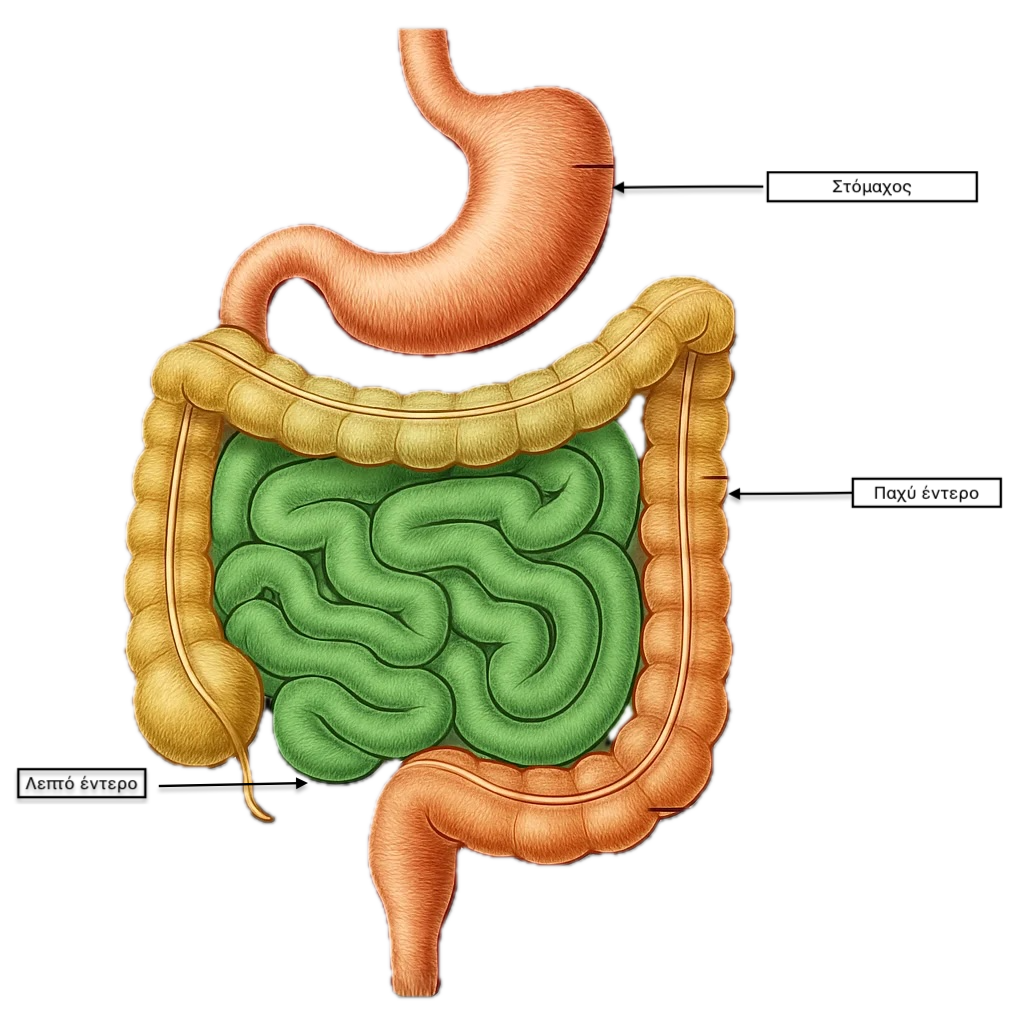
Small intestine: The most common malignant lesions of the small intestine are adenocarcinoma, neuroendocrine tumors, and GIST (gastrointestinal stromal tumors). Small intestine neoplasms are rare and are usually discovered after the appearance of atypical symptoms, such as abdominal pain, obstructive ileus, and bleeding. Their management is almost always surgical and depends on the tumor location, the patient’s symptoms, and medical history.
Large intestine: Colorectal cancer is one of the most common malignancies in humans. The main causative and predisposing factors include smoking, alcohol consumption, lack of physical activity, age, and obesity. Additionally, certain patient groups with a family history of colorectal cancer, the presence of inflammatory bowel disease, and genetic syndromes are predisposed to the development of colorectal neoplasms. Depending on the tumor location, corresponding symptoms may appear, such as chronic anemia, colonic obstruction, or rectal bleeding.
Management of colorectal neoplasms represents a modern challenge, requiring collaboration between multiple medical specialties within a multidisciplinary oncology board. Decision-making should follow contemporary clinical guidelines and rely on the presence of an experienced surgical team to achieve the best oncological outcome. The type of surgical procedure, as well as the approach —open or laparoscopic— depends on tumor location and the expertise of the surgical team.
Other conditions: Beyond malignancies, the small and large intestines may present a variety of mainly benign conditions. One of the most common pathologies is the presence of diverticula, mainly in the large intestine, associated with the so-called Western lifestyle, including poor diet and lack of exercise. Diverticular disease often presents in flares and remissions and requires surgical intervention in cases of complications, such as perforation, or in cases of multiple recurrences affecting the patient’s quality of life. Other benign surgical conditions of the intestines include adhesions, internal hernias, and inflammatory bowel diseases.
Special mention should also be made of endometriosis, which may be located either intra-abdominally in segments of the large intestine or within the abdominal wall. The etiology of this condition is varied, and the heterogeneity of symptoms often leads to delayed diagnosis. Management depends on the location; endometriosis of the large intestine may require local or more extensive colectomy, whereas abdominal wall endometriosis typically requires excision of the lesion, often together with a portion of the abdominal muscles.